12 Fun Activities for You and Your Dog During Social Isolation
Learn New Tricks
Now is a great time to reinforce old favorites like “sit” or “shake” or introduce new tricks. How about “high 5” or “rollover”? Experiment with different training strategies such as clicker training. Keep training sessions short and frequent for the best learning.
Treat Puzzles
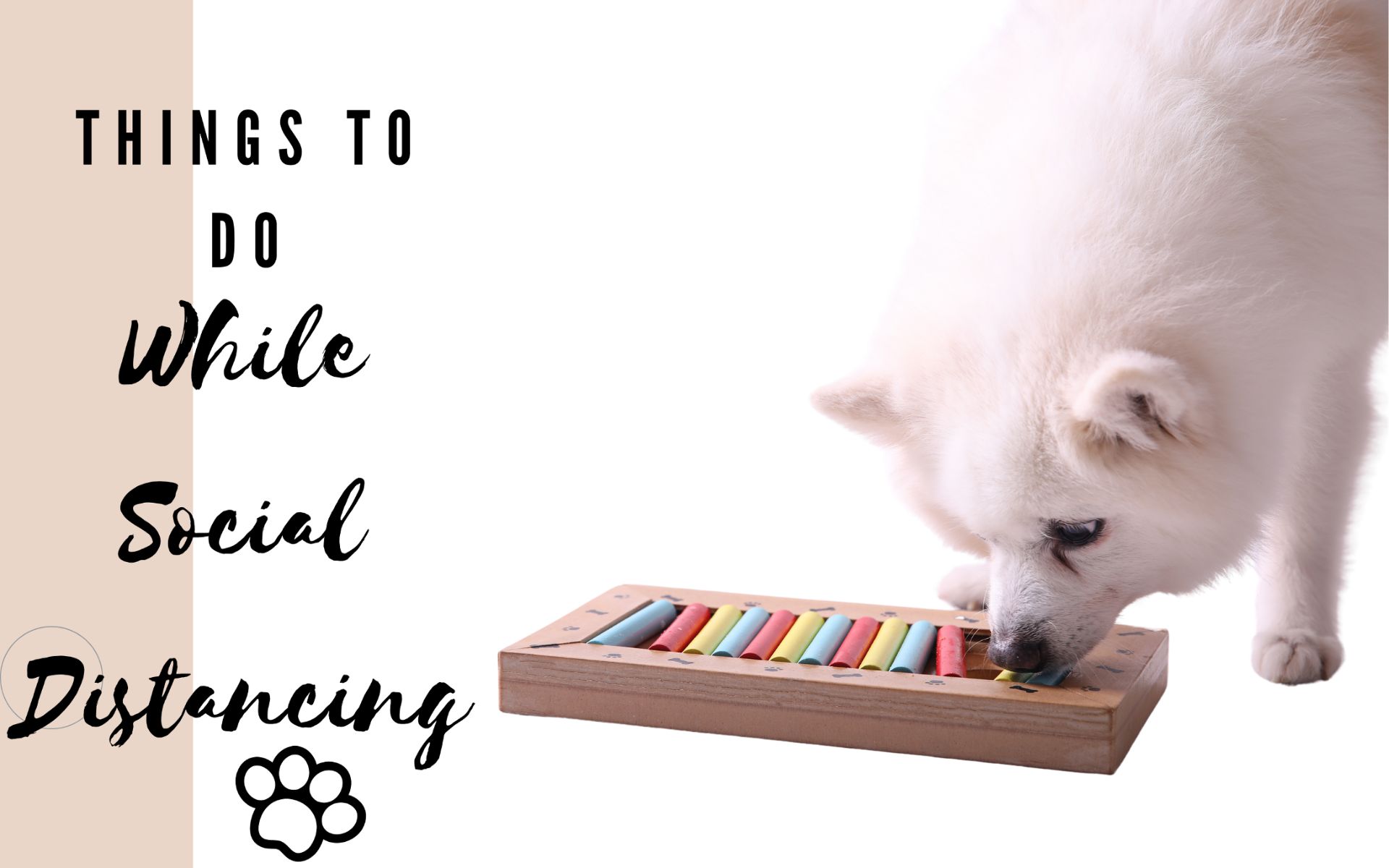
Puzzles are excellent mental stimulation for your pup and they can help you find your crafty side. Fill old tennis balls, muffin tins, PVC pipes, old milk jugs, nesting cardboard boxes etc. with small kibble and watch your pup go wild. Remember that every toy is destructible so always supervise your dog if you think there is any chance they could chew off a piece or swallow it.
Obstacle Course or Indoor Playground
This activity is great for energetic breeds and nervous pups who need exposure to different environments. Use supplies you already have in your home. Build a jump out of PVC pipes or broomsticks. Build a collapsed tunnel with blankets. Integrate unknown surfaces on the ground like newspaper or a partially inflated air mattress.
Go on a Long Walk
If your local restrictions allow, use this opportunity to explore a new path or route. Take the road less traveled so you can stay greater than 6 ft from other walkers or runners. Practice leash walking so your pup can also practice appropriate socialization skills!
Have a Photo Shoot
Has your pup always wanted to be an instagram star? Make sure you tag @yourmesavet on Instagram!
Watch a Canine Friendly Flick Together
Older and quieter dogs may simply benefit from more cuddle time. Snuggle up on the couch together and choose movies like 101 Dalmations, The Art of Racing in the Rain, A Dog’s Journey, The Secret Life of Pets, or Marley and Me. Grab the tissue box for many of these!
Dog Yoga
We all need new routines for mental health and exercise during this pandemic. Smaller dogs can be lifted during poses like “Warrior I”. Stretch alongside larger dogs or rest together side by side during quieter poses.
Practice Overcoming Sensitive Spots
Many dogs have sensitive areas where petting is less welcome such as feet or ears. Slowly and safely teach your dog to allow touch in these spots. If your dog’s nails are sensitive, for example, start with touching the leg and offering high value treats. Each session, move closer down the leg to your dog’s feet and nails. Alternatively, teach a prolonged “shake” to allow your dog to feel comfortable placing her own foot in your hand. These exercises at home will greatly improve your dog’s tolerance to physical exams the next time they visit us at Mesa Veterinary Hospital.
Paw Print Art
Immortalize your relationship with your pets and create beautiful wall art in the meantime! Use non-toxic washable paint and wash your dog’s paw thoroughly when finished. If you have a puppy, consider doing this art at multiple stages in their life to watch those feet grow.
Search and Sniff
Nose work is an excellent way to use your pup’s natural talent to keep them entertained. The only thing you need is a bag of yummy treats. Start by teaching your dog the “what hand?” game then progress to hiding food around the house. Dogs have 300 million scent receptors in their nose compared to humans’ 6 million!
Brush Your Dog’s Teeth
Daily brushing is an essential part for your dog’s oral health. Daily brushing prevents tartar accumulation and periodontal disease, decreasing the likelihood that your dog will need treatments (such as extractions) during their annual dental cleanings. Call or visit Mesa to purchase some dog friendly toothpaste and a free toothbrush.
Bake Homemade Dog Treats
Unless you have a specifically formulated and supplemented nutritional plan, exclusively home cooked diets can be dangerous. However, the occasional freshly baked treat can be delicious! Use this safe and healthy recipe from Colorado State University. Anything that is toxic to dogs or can make them ill should not be used. Here is the ASPCA list of human foods that should be left out of dog treats.